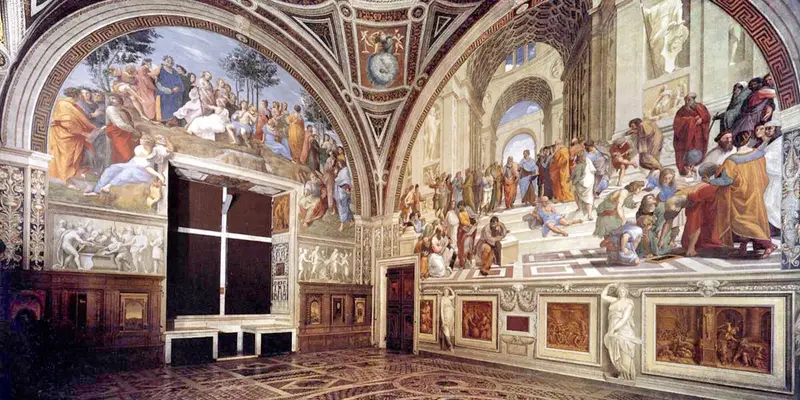
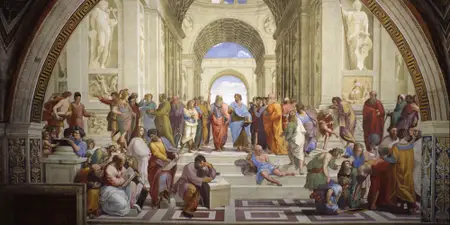
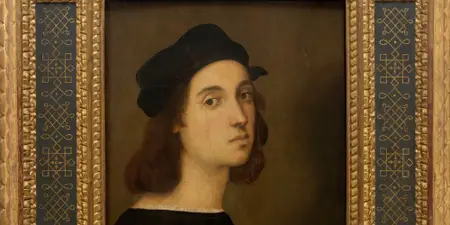
Raphael arrived in Rome in 1508 — the same year Michelangelo began the Sistine ceiling — and spent his final twelve years frescoing the papal apartments now known as the Raphael Rooms, including the School of Athens, before his sudden death in 1520 at just 37.
Most famous frescoSchool of Athens, Stanza della Segnatura
Died1520, age 37 — buried in the Pantheon, Rome
Raphael's entire Vatican career fits inside twelve years.
A young painter summoned to Rome
Already known in Florence and Urbino, Raphael was called to Rome by Julius II in 1508 to fresco his private apartments — the same year, in the same palace, that Michelangelo began the ceiling nearby.
The Stanze: four rooms, a career's work
He and his workshop frescoed four rooms over more than a decade, working for three successive popes.
School of Athens: philosophy in paint
The best known fresco imagines history's great philosophers together in one hall — Plato and Aristotle at the centre — and, by tradition, includes portraits of Raphael's contemporaries among the figures, Leonardo da Vinci among them.
By most accounts, no — they worked as rivals in the same palace, reportedly with real tension between them, though both were producing masterpieces at the same time.
Did Raphael ever see the Sistine Chapel ceiling while it was being painted?
Likely yes, at least partially — the two men worked in the Vatican palace simultaneously for years, and art historians see possible traces of Michelangelo's influence in Raphael's later Vatican work.
How much of the Raphael Rooms did Raphael paint himself?
Less than visitors assume — like most Renaissance masters, he designed the scenes and painted key figures himself, while his workshop executed much of the surrounding detail.