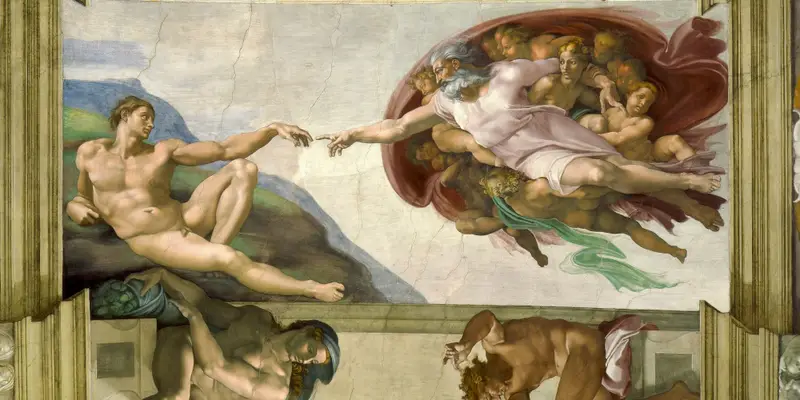
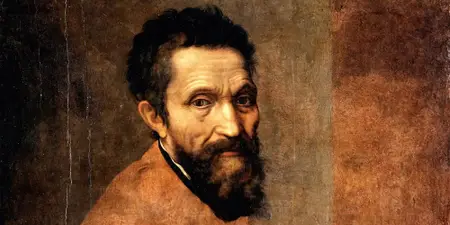
Michelangelo painted the Sistine Chapel ceiling between 1508 and 1512, commissioned by Pope Julius II. The central section shows nine scenes from the Book of Genesis, including the famous Creation of Adam, framed by painted prophets, sibyls and athletic nude figures known as ignudi.
Running down the centre of the ceiling, in narrative order, Genesis unfolds: the Separation of Light
from Darkness, the Creation of the Sun, Moon and Plants, the Separation of Land from Water, the Creation
of Adam, the Creation of Eve, the Fall and Expulsion from Eden, the Sacrifice of Noah, the Flood, and the
Drunkenness of Noah.
Prophets, sibyls and ignudi
Around the Genesis scenes, Michelangelo painted alternating prophets and sibyls (female prophetic
figures from classical mythology), plus twenty athletic nude youths — the ignudi — that showcase
his sculptor's understanding of the human body.
Did he really paint it lying down?
No — that's a popular myth. Michelangelo designed a custom scaffold that let him stand while painting
overhead, though craning his neck upward for years still took a well-documented physical toll, described in
his own letters and poems from the period.
Did Michelangelo paint the ceiling lying on his back?
No, that's a myth — he designed a scaffold that let him stand while painting, though it was still gruelling work on his neck and back.
What is the most famous scene on the ceiling?
The Creation of Adam, showing God's and Adam's hands almost touching near the centre of the ceiling.
Did Michelangelo work on the ceiling alone, or with assistants?
He had assistants for preparatory work like plaster and pigment grinding, but painted virtually all of the ceiling's figures himself — unusual for a commission of this scale in his era.
Last verified: August 2026.
Source: Vatican Museums official website (museivaticani.va).