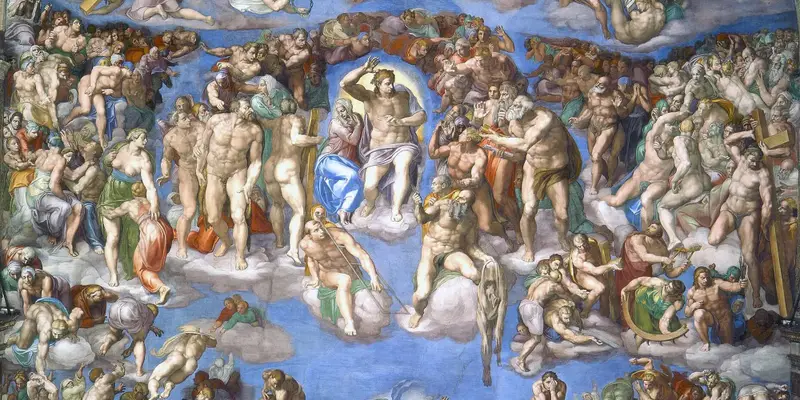
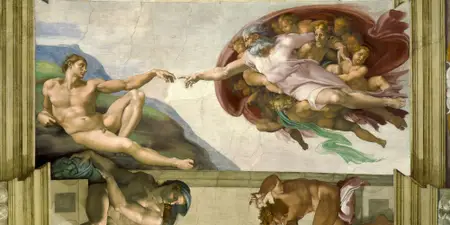
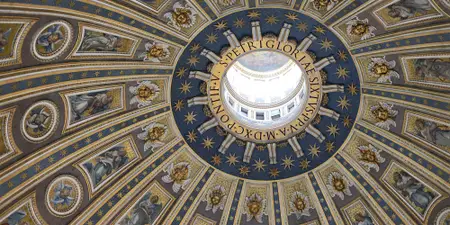
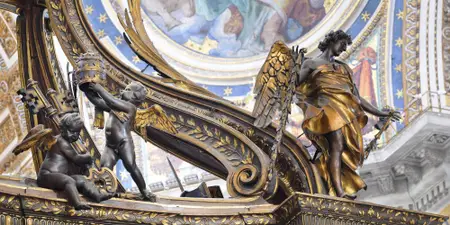
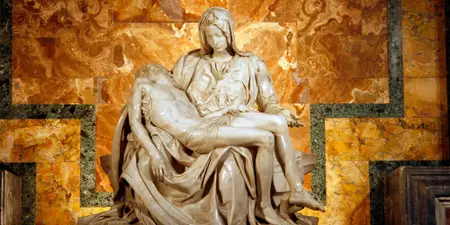
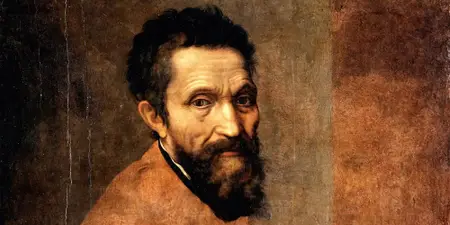
Michelangelo's Vatican work spans over 60 years: the Pietà (1498–99) in St. Peter's Basilica, the Sistine Chapel ceiling (1508–1512), the Last Judgment (1536–1541), and finally the dome of St. Peter's, which he designed in old age but did not live to see finished.
First Vatican workPietà, 1498–99, St. Peter's Basilica
Ceiling painted1508–1512
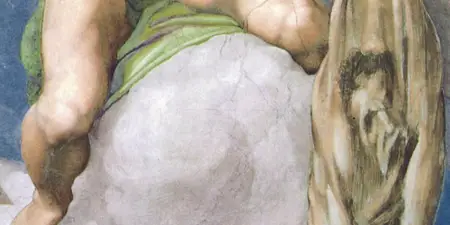
Last Judgment painted1536–1541
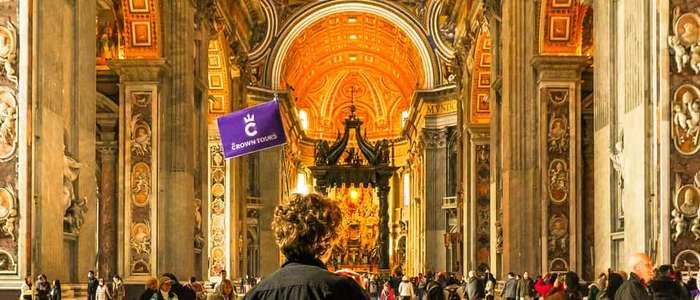
Final projectDome of St. Peter's, designed from 1546, completed 1590 — 26 years after his death
No single artist shaped the Vatican more, or over a longer stretch of his life.
A reluctant painter
Michelangelo considered himself a sculptor first, and reportedly resisted Pope Julius II's 1508 commission to paint the Sistine Chapel ceiling before eventually accepting.
The ceiling and the Last Judgment
He returned to the same room over two decades later, painting the Last Judgment on the altar wall between 1536 and 1541 — a very different, darker work from the ceiling.
One last project: the dome
In his late 70s, Michelangelo took over as chief architect of the new St. Peter's and redesigned its dome. He died in 1564 having only seen the base built; the dome itself was completed to his design in 1590.
Did Michelangelo paint the ceiling lying on his back?
No — this is a popular myth. He worked standing, leaning backwards, on a purpose-built elevated scaffold of his own design.
Did Michelangelo sign the Pietà?
Yes — it's the only work he ever signed, reportedly after overhearing visitors credit it to another sculptor; he later regretted the vanity and never signed another piece.
How is the Last Judgment different in style from the ceiling Michelangelo painted decades earlier?
Darker and more turbulent — painted after the Sack of Rome and amid Michelangelo's own advancing age, it shows a harsher, more anxious vision than the ceiling's confident, orderly compositions.