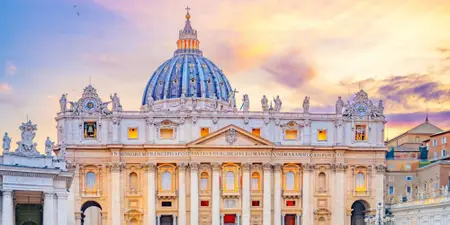
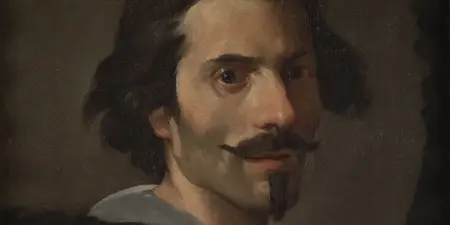
Gian Lorenzo Bernini shaped the experience of St. Peter's more than any artist after Michelangelo: he designed the bronze Baldacchino over the papal altar and the sweeping colonnade embracing St. Peter's Square, working for eight successive popes over six decades.
Other Vatican worksCathedra Petri, Scala Regia, fountains in the square
A century after Michelangelo and Raphael, one more artist left a mark just as permanent.
A sculptor who became an architect
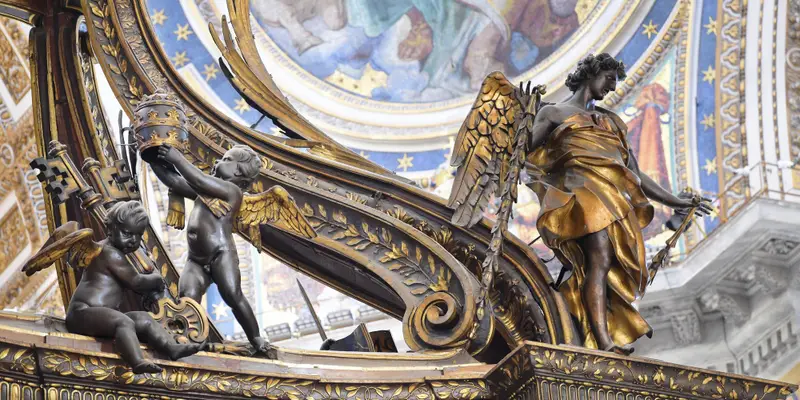
Bernini trained as a sculptor but became, in effect, chief architect of Baroque Rome — reshaping St. Peter's inside and out.
The Baldacchino: bronze over the apostle's tomb
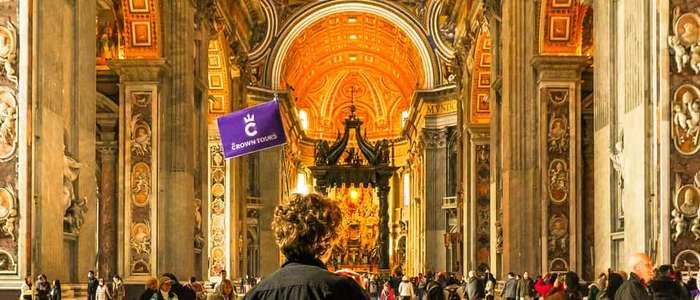
His twisting bronze canopy, completed in 1633, marks the altar built directly above the traditional site of Peter's grave.
The colonnade: 'the maternal arms of the Church'
Bernini himself described his curving colonnade, built through the 1660s, as embracing visitors entering the square — welcoming the faithful and, in his words, even those outside the Church.
Where did the bronze for the Baldacchino come from?
Tradition holds much of it was stripped from the ancient portico of the Pantheon, prompting the contemporary jibe 'quod non fecerunt barbari, fecerunt Barberini' ('what the barbarians didn't do, the Barberini did'). Historians today debate how much bronze actually came from the Pantheon versus other sources.
Did Bernini design St. Peter's Basilica itself, or just its decoration?
Just its interior decoration and the square outside — the Basilica's architecture was largely finished under Michelangelo's dome design and other architects before Bernini's era began.
How tall is Bernini's Baldacchino?
About 29 metres — roughly as tall as an eight-storey building, and by design still smaller than the dome soaring above it.