The Vatican Necropolis: What's Actually Down There
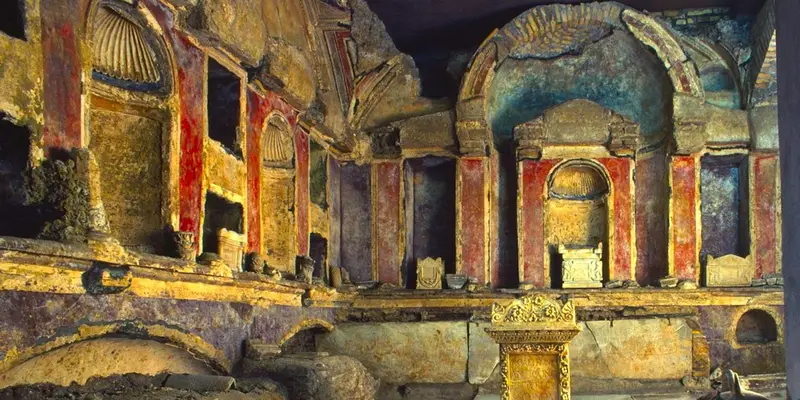
Excavated between 1940 and 1949 on the orders of Pope Pius XII, the Vatican Necropolis is a buried street of Roman-era family mausoleums directly beneath St. Peter's Basilica — including the 2nd-century monument archaeologists identify with Saint Peter's grave.
What it isA buried Roman street of family mausoleums
Best-known tombThe Julii mausoleum, with an early mosaic of Christ as Sol Invictus
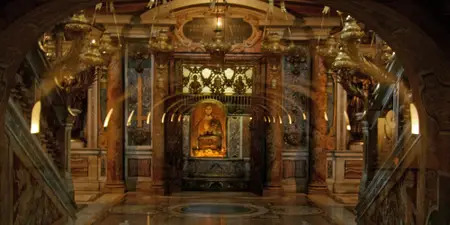
Central discoveryA 2nd-century monument over the traditional site of Peter's grave
Much of the Vatican's earliest history is, quite literally, still down here.
A street, not a single tomb
The necropolis is a row of family mausoleums built along what was once an open-air Roman street, later buried under Constantine's basilica.
Pagan and Christian, side by side
One tomb, belonging to the Julii family, contains an early mosaic depicting Christ in the guise of the pagan sun god Sol Invictus — a rare glimpse of Christian imagery still borrowing pagan visual language.
What archaeologists found at the centre
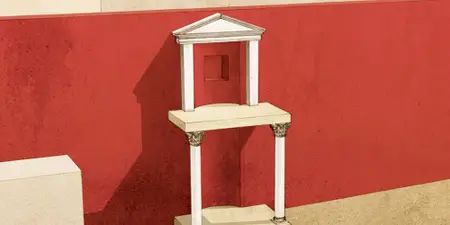
Excavations converged on a simple 2nd-century monument, the presumed marker of Peter's grave — the reason the entire basilica sits exactly where it does.
Why did excavation of the Necropolis only begin in 1940?
Pope Pius XII ordered it after workers preparing a tomb beneath the Basilica in the late 1930s stumbled onto ancient walls — the dig that followed wasn't a long-planned project but a direct response to that discovery.
Is the tomb identified as Saint Peter's grave definitively proven to be his?
Not with absolute certainty — the Vatican considers the archaeological and historical evidence strong enough to identify it as his, though, as with most ancient burials, it can't be proven beyond all doubt.
What else is buried in the Necropolis besides the area near Saint Peter's tomb?
A full street of Roman-era family mausoleums, complete with decorated facades and inscriptions — it was a pagan and early Christian burial ground before the Basilica was ever built above it.