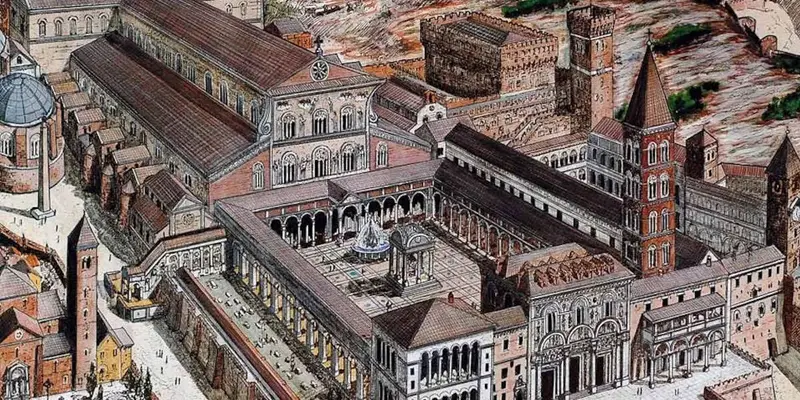
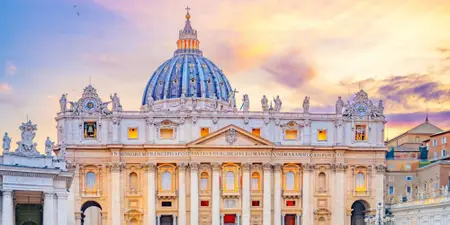
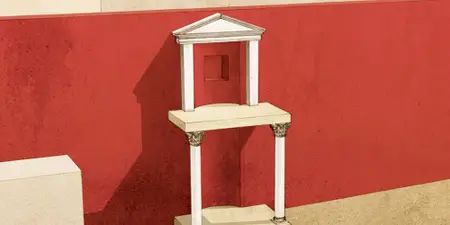
Around AD 319–329, Emperor Constantine ordered the first St. Peter's Basilica built directly over the necropolis and the apostle's grave — deliberately burying an entire hillside cemetery rather than disturbing the tomb it was built to honour.
Engineering featLevelled part of Vatican Hill, buried the existing necropolis intact
Stood until16th century — replaced by the present basilica, begun 1506
Building on the Vatican Hill made no practical sense — and Constantine did it anyway.
An emperor's gamble on a swamp
The Vatican Hill was unstable, marshy ground, a poor site for a monumental basilica by any normal standard.
Building over the tomb, not beside it
Constantine's architects chose to bury the existing necropolis under a massive levelling platform rather than move Peter's grave — so the altar could sit directly above it.
What remained until the Renaissance
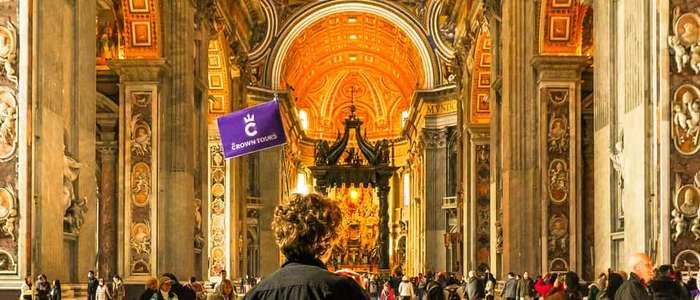
That basilica stood for roughly 1,200 years, until it was structurally failing and Pope Julius II began replacing it with the church visitors see today.
Can visitors see Constantine's original basilica today?
Not above ground — it was demolished during the Renaissance rebuilding. Fragments and foundations are visible on the Vatican Necropolis (Scavi) tour, beneath the present basilica.
Why did Constantine choose this specific hillside for the Basilica?
Because it already held the site Christians identified as Peter's grave — building directly over it, whatever the engineering difficulty, mattered more than picking an easier location.
Was Constantine's basilica the same size as the current St. Peter's?
No — it was smaller and built in a different architectural style entirely; almost nothing of the original structure remains visible after the Renaissance rebuilding replaced it.