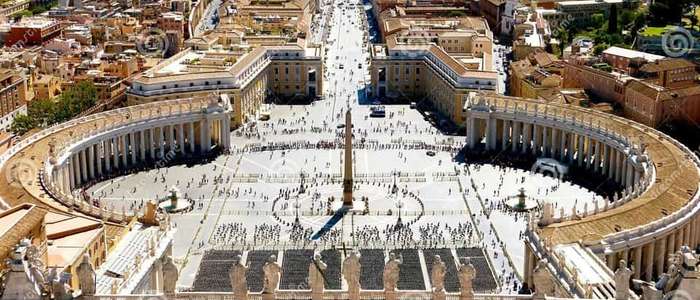
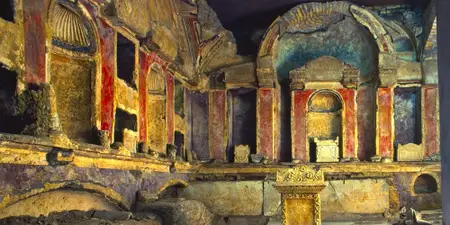
Christian tradition holds that the apostle Peter was martyred in Rome under Nero and buried in the ordinary cemetery on Vatican Hill — a modest grave that, centuries later, is the entire reason the Vatican became the seat of the papacy.
Traditional date of martyrdomc. AD 64–68, Neronian persecution
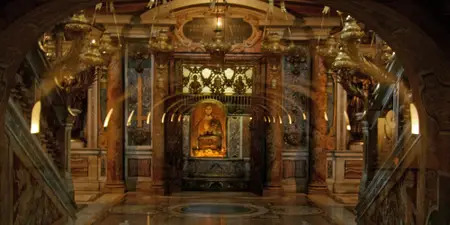
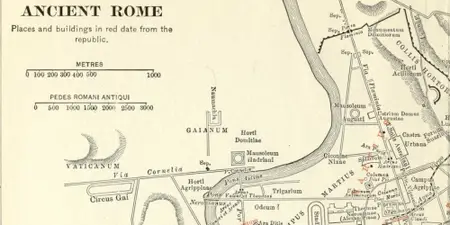
Burial siteVatican necropolis, Vatican Hill
Key evidence2nd-century monument and graffiti found beneath the basilica, excavated 1940s–50s
Church's positionRemains found near the monument announced as consistent with Peter's, 1968
Nothing about the Vatican's location was planned — it follows from where one man was buried.
Why Peter came to Rome
Church tradition holds that Peter, leader of the apostles, travelled to Rome and led the Christian community there in the years before his death.
Martyrdom under Nero
Tradition places his execution during Nero's persecution of Christians, following the fire of Rome in AD 64, inside or near Nero's Circus in the Vatican district.
A grave, not a monument
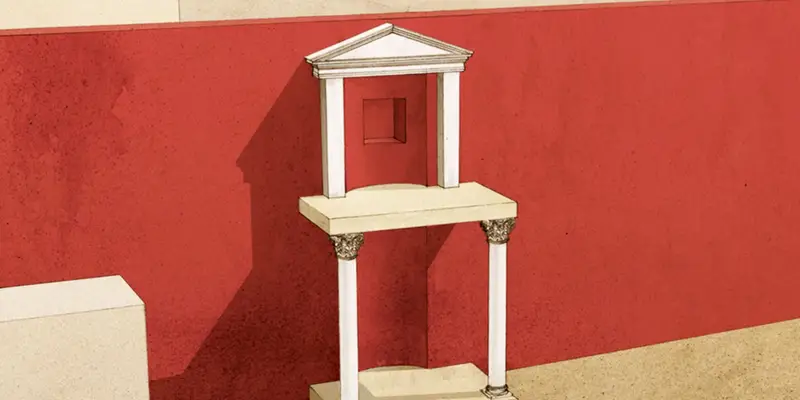
He was buried nearby in the ordinary necropolis — not in any special tomb. A simple 2nd-century memorial (the 'Trophy of Gaius') was later built over the spot, which archaeologists rediscovered in excavations ordered by Pope Pius XII.
Is there scientific proof these are Peter's bones?
Not definitive scientific proof — the case rests on the location, the age of the monument, and early Christian graffiti naming Peter found at the site. The Vatican treats the remains as authentic; historians describe the evidence as strong but circumstantial.
Why was Peter buried in an ordinary cemetery rather than somewhere more prominent?
Because as an executed criminal under Roman law, a modest grave alongside other ordinary burials was the only option available to his followers at the time.
How long after Peter's death was the first basilica built over his grave?
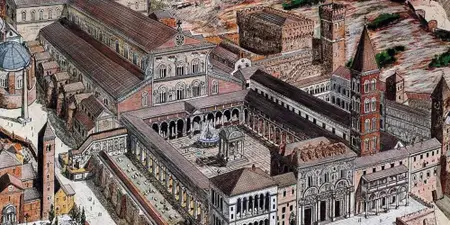
About two and a half centuries — Constantine's basilica wasn't begun until the early 4th century, long after living memory of the burial itself had passed.