The artists behind the works every visitor comes to see — and what they actually made, when, and why.
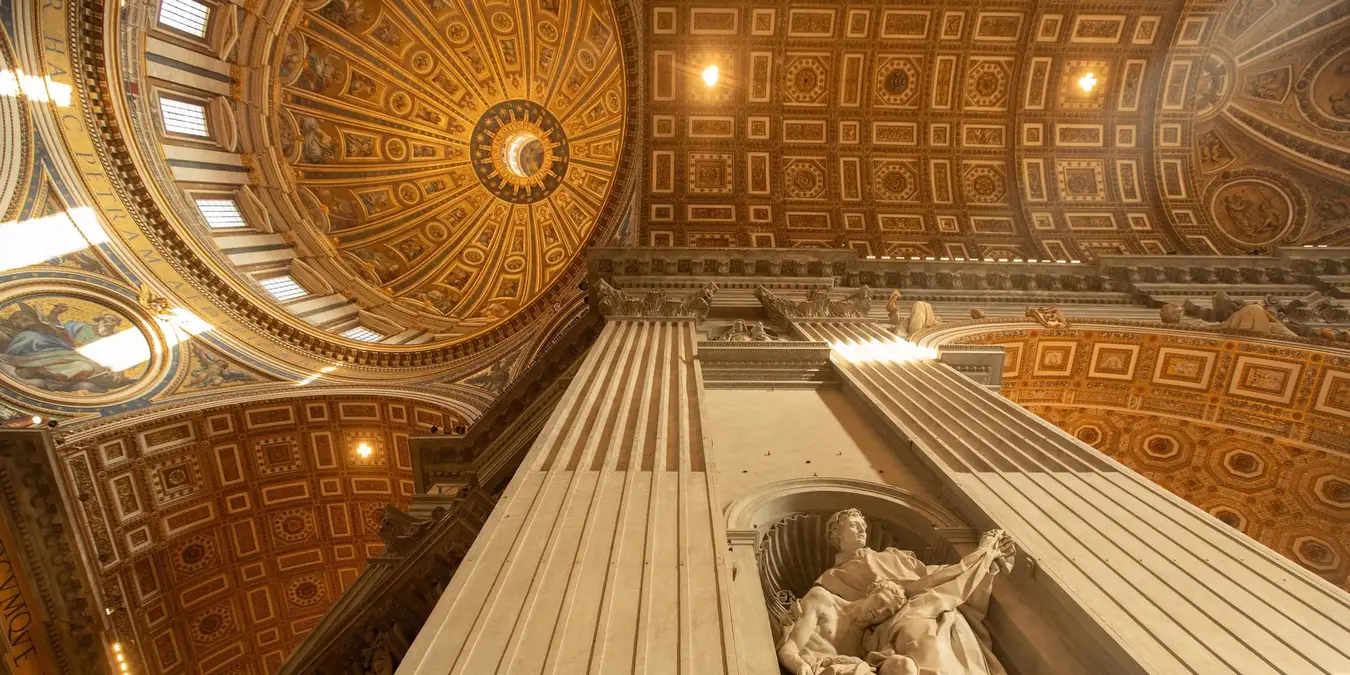
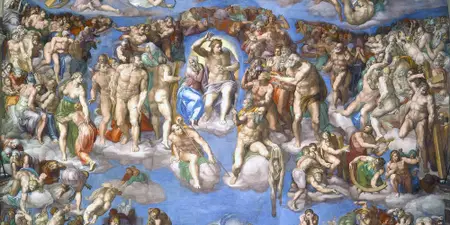
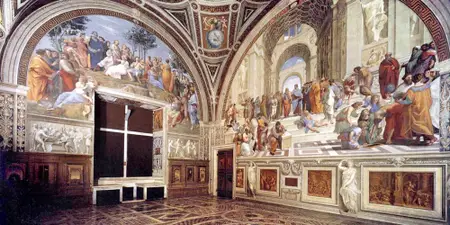
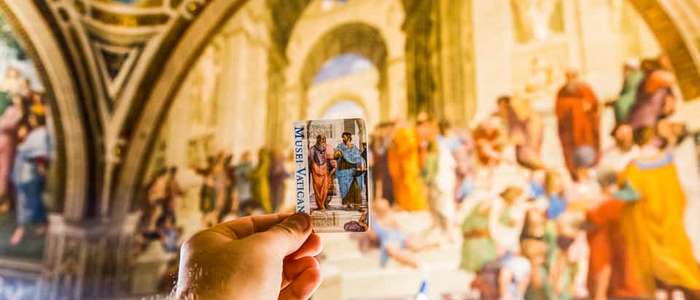
Three names explain most of what visitors come to see: Michelangelo (the Sistine ceiling, the Last Judgment, the Pietà, and finally the dome), Raphael (the frescoed Stanze, including the School of Athens), and Bernini (St. Peter's Baldacchino and colonnade) — spanning roughly 1500 to 1670.
RenaissanceMichelangelo, Raphael (both working from 1508)
BaroqueBernini (mid-1600s)
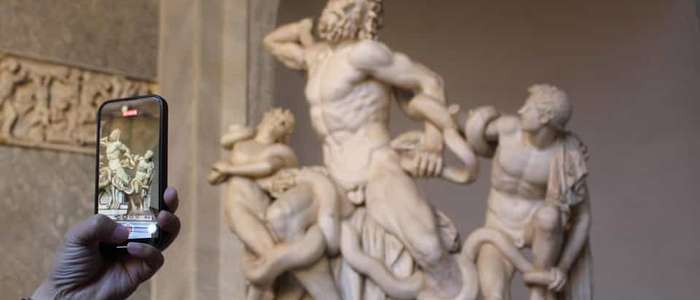
Oldest major workThe Laocoön, a Roman-era sculpture (found 1506)
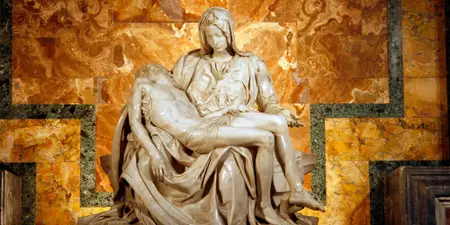
Only signed sculptureMichelangelo's Pietà
The Vatican's art collection spans over 2,000 years, but a handful of names — worked into a few decades each — explain almost everything a first-time visitor actually sees.
Two rivals, one decade
Michelangelo and Raphael worked simultaneously in the same palace from 1508, reportedly barely speaking to each other, and between them produced the ceiling, the Last Judgment and the Stanze.
A century later, Bernini
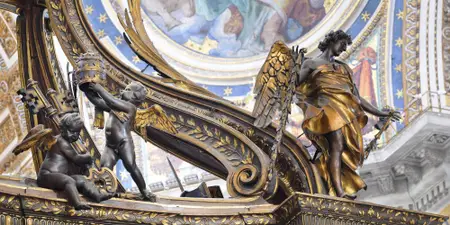
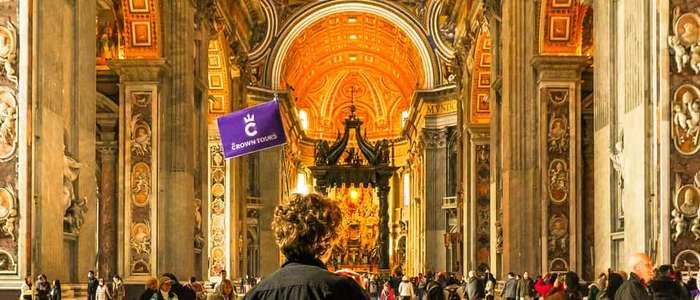
Bernini's contribution came later and differently: not frescoes but bronze, marble and architecture — the Baldacchino over the papal altar and the colonnade embracing the square outside.
What is the single most famous artwork in the Vatican?
The Sistine Chapel ceiling is usually named first, though Michelangelo's Pietà and Raphael's School of Athens are close behind — all three are in different buildings, so seeing 'the Vatican's art' means visiting more than one place.
Did Michelangelo, Raphael and Bernini ever compete directly for the same commission?
Not directly against each other, though Michelangelo and Raphael worked under the same patron at the same time, and their rivalry for papal favour was well known even then.
Is most of the Vatican's art religious in subject, or is there secular work too?
Predominantly religious, given the setting, but there's real secular and classical content too — from ancient Roman sculpture to the School of Athens' gathering of philosophers.
Which Vatican artist's work is most spread across multiple locations, rather than concentrated in one room?
Michelangelo's — his work spans the Sistine ceiling, the Last Judgment, the Pietà in the Basilica, and the dome, while Raphael's and Bernini's major works are more concentrated in specific rooms or spaces.