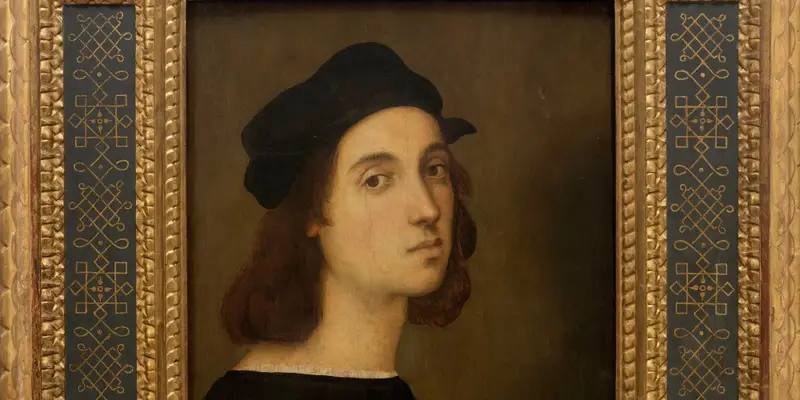
Born in Urbino in 1483 to a painter father, Raphael became one of the most sought-after artists in Italy by his twenties, ran a large workshop in Rome, and died suddenly in 1520 at just 37.
He achieved in a short life what others didn't manage in twice the time.
A prodigy from a painting family
His father's death when Raphael was 11 pushed him into painting workshops early; he was already an accomplished master by his early twenties.
Charm as a career asset
Unlike the difficult Michelangelo, Raphael was by most accounts sociable and diplomatic — qualities that helped him run one of the era's largest workshops and secure papal commissions.
A sudden death
He died on Good Friday 1520 after a short illness, aged 37; contemporaries, including Vasari, gave conflicting accounts of the exact cause. He was buried, at his own request, in the Pantheon.
How did Raphael, dying at just 37, produce so much work at the Vatican?
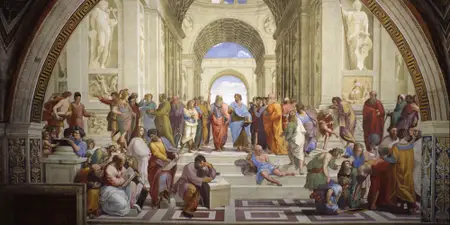
He ran a large, highly organized workshop of assistants who executed much of the painting from his designs — a common Renaissance practice that let him take on far more commissions than one person alone could finish.
Was Raphael already famous before he came to Rome?
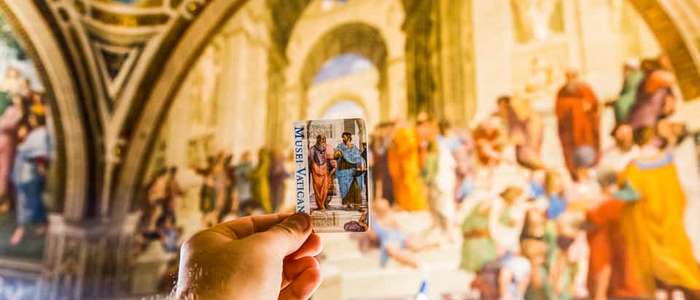
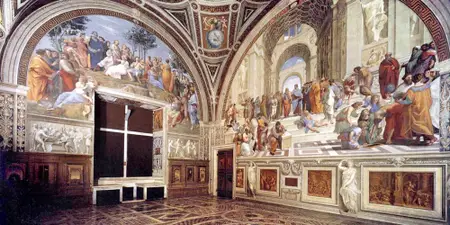
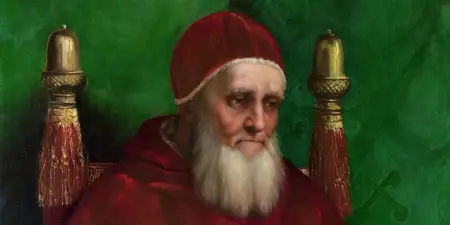
Yes — he'd built a strong reputation in Florence and Urbino in his early twenties, which is why Pope Julius II brought him to Rome to work on the papal apartments now known as the Raphael Rooms.
What was Raphael working on when he died?
The Transfiguration, left unfinished at his death in 1520 — it was completed by his workshop and is now in the Vatican Pinacoteca.