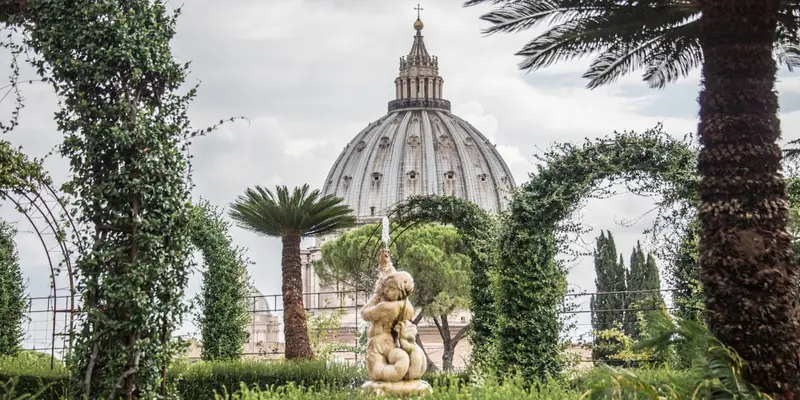
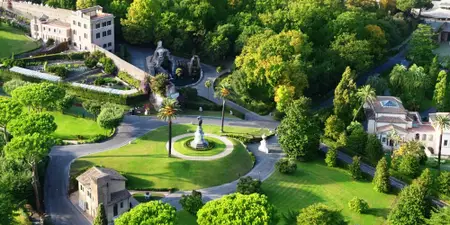
Covering roughly half of Vatican City, the Vatican Gardens have been cultivated since medieval times and today mix formal Italian and French garden design with fountains, a working radio transmission site, and a full-scale replica of the Lourdes grotto.
Notable featuresCasina Pio IV, a Lourdes grotto replica, Vatican Radio's original transmission site
Half of the world's smallest country is, technically, a garden.
Centuries of gradual cultivation
Popes have maintained gardens on this ground since the Middle Ages, though most of today's formal layout dates from the Renaissance and later.
A working part of the Vatican, not just ornamental
Vatican Radio's original transmission towers stood here, and the gardens still host functioning fountains and a full-scale replica of the Lourdes grotto in France.
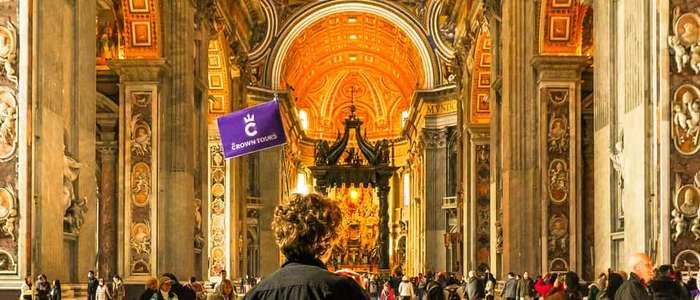
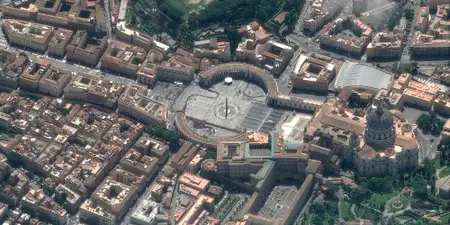
The Gardens border the Vatican's western wall, screened from St. Peter's Square by the Basilica itself — invisible from the square below, which is part of why so many visitors don't realise a working garden takes up nearly half the entire state until they see a map.
Why does Vatican City have a radio transmission site inside its gardens?
Vatican Radio has broadcast from the gardens since the 1930s, when Guglielmo Marconi himself helped set up the original transmitter for the Holy See.
Is the Lourdes grotto replica in the gardens a modern addition?
No — it dates to the early 20th century, built as a full-scale copy of the French shrine and still used for prayer today.
Do the Vatican Gardens follow one single design style?
No — they blend distinct sections built up over centuries, mixing formal Italian terraces with French-style layouts added later, rather than a single unified plan.