Four details reward a closer look: a distorted self-portrait Michelangelo is widely believed to have hidden in a flayed skin, a critic he immortalised in Hell with donkey ears, twenty unexplained nude figures, and the fact that — unlike his signed Pietà — he never signed the ceiling at all.
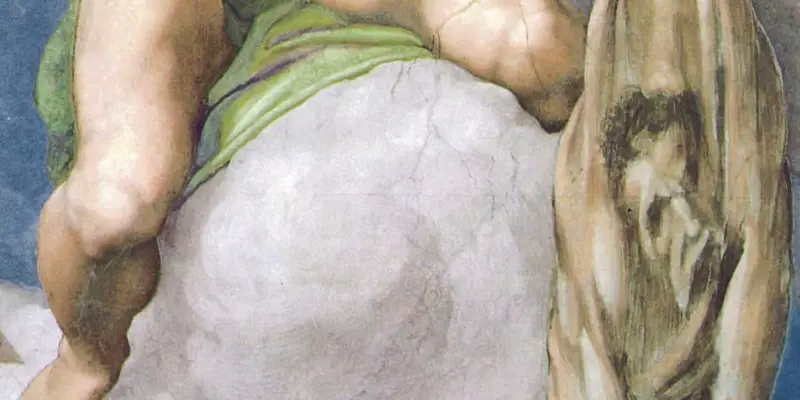
Hidden self-portraitWidely interpreted — a flayed skin held by St. Bartholomew, Last Judgment
Personal revengeFACT (per Vasari) — critic Biagio da Cesena painted as Minos, with donkey ears
Unexplained figures20 "ignudi" (nude youths), no agreed meaning
SignatureNone — unlike the Pietà, the ceiling is unsigned
Look past the famous scenes and the ceiling has a few more personal touches.
Widely interpreted — a self-portrait in flayed skin
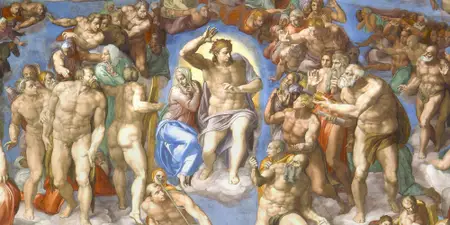
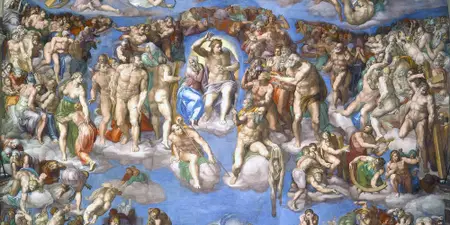
In the Last Judgment, St. Bartholomew holds his own flayed skin — its sagging, distorted face is widely interpreted by art historians as a self-portrait, though Michelangelo never confirmed this himself.
FACT — a critic sent to Hell
According to the near-contemporary biographer Giorgio Vasari, papal master of ceremonies Biagio da Cesena criticised the Last Judgment's nudity — so Michelangelo painted him into it as Minos, judge of the underworld, with donkey ears and a serpent. When Biagio complained, Pope Paul III reportedly joked that his authority didn't extend to Hell, and the portrait stayed.
Unexplained — the ignudi
Twenty nude young men punctuate the ceiling's main scenes. Art historians still debate their exact meaning; Michelangelo left no explanation.
FACT — no signature
Unlike his Pietà — the only work he ever signed, after overhearing it wrongly attributed to someone else — Michelangelo never signed the Sistine ceiling.
Did Michelangelo really take revenge on a critic in the painting?
This is well documented by Vasari's contemporary account: Biagio da Cesena is traditionally identified as the donkey-eared figure of Minos, painted in apparent response to his criticism.
Is Michelangelo's hidden self-portrait easy to spot without help?
Not at all — it's a distorted face on a flayed skin held by Saint Bartholomew in the Last Judgment, easy to miss unless you know exactly where to look.
Why did Michelangelo leave the twenty nude figures on the ceiling unexplained?
Art historians still debate their exact meaning — no contemporary document explains them, part of why they remain one of the ceiling's most discussed puzzles.