Vatican "mysteries" range from mundane, well-documented facts — a private train station, a supermarket, a fortified escape tunnel — to a name that just sounds more sinister than it is. This roundup keeps fact and myth clearly apart.
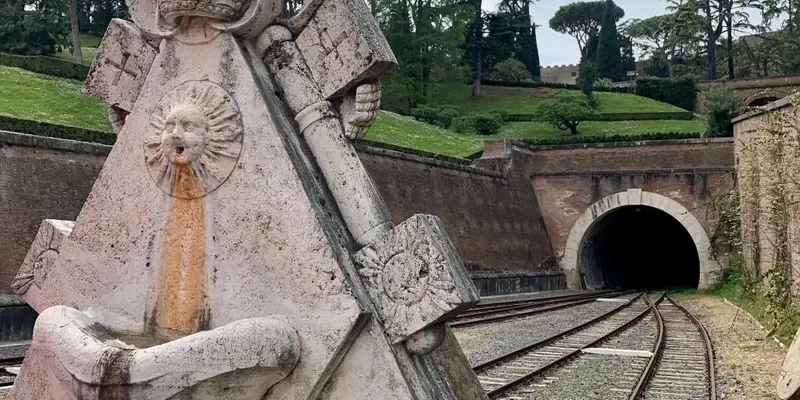
Vatican train stationFACT — built 1929, about 300 metres of track
Passetto di Borgo tunnelFACT — 13th-century fortified corridor to Castel Sant'Angelo
"Secret" ArchivesReal archive, misleading name (see below)
Vatican supermarket & pharmacyFACT — serves residents and staff
Some of the most-repeated Vatican "mysteries" turn out to be the easiest to verify.
FACT — a private train station
Vatican City has had its own railway station since 1929, connected to the Italian network by roughly 300 metres of track, used rarely and mostly for freight or ceremonial occasions.
FACT — the Passetto di Borgo
An 800-metre elevated, fortified corridor built in the 13th century genuinely connects the Vatican to Castel Sant'Angelo — popes have used it to flee in emergencies, most famously in 1527.
Misleading name — the "Secret" Archives
Despite the name, "secret" here translates a Latin/Italian sense closer to "private" or "personal" (the pope's own archive) rather than classified. Scholars have been able to apply for access for over a century; the archive was formally renamed the Vatican Apostolic Archive in 2019.
FACT — a supermarket and a pharmacy
With around 800 residents and thousands of daily staff, Vatican City runs its own tax-free supermarket and a well-known pharmacy.
Partly — guided access to sections of it is occasionally offered via Castel Sant'Angelo, though availability is limited and not guaranteed.
Does the Vatican really have its own train station?
Yes, genuinely — Vatican City has a small train station built in the 1930s, used occasionally for freight and ceremonial arrivals rather than regular passenger service.
Is the Vatican Bank as secretive as its reputation suggests?
It has been the subject of real historical scandals, though much of its day-to-day operation is more mundane administration than the mystery its reputation suggests.