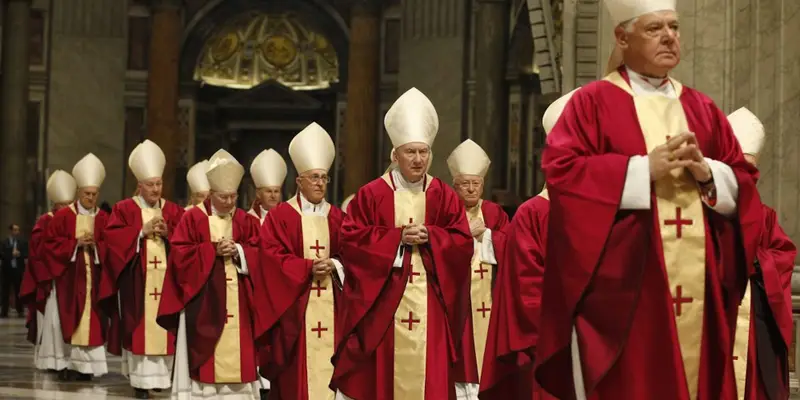
The College of Cardinals is the body of senior Church leaders appointed directly by the pope — an honor with no fixed size, though only those under 80 at the time of a vacancy actually get to vote for his successor.
Typical backgroundArchbishops, senior Vatican officials, some theologians
Voting age limitUnder 80 at the start of a conclave
Cap on electors120
Symbol of the rankThe red biretta and cardinal's robes
Being a cardinal isn't a job with an application form — it's an honor one man alone decides to give.
Chosen personally by the pope
There's no fixed process or quota: a pope simply selects who to elevate to the College, typically archbishops of major dioceses and senior Vatican officials, though occasionally distinguished theologians with no diocese at all.
Not every cardinal can vote for the next pope
Once a cardinal turns 80, he keeps the title and its honors but loses the right to enter a conclave — a rule meant to keep the voting body from becoming unmanageably large or elderly for the physical demands of a sequestered vote.
A global body, not just a Roman one
Modern popes have deliberately appointed cardinals from far beyond Europe, reflecting the Church's genuinely global makeup — a shift visible in Pope Leo XIV's own path from Chicago to Peru to the papacy itself.