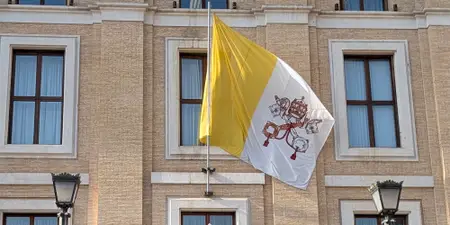
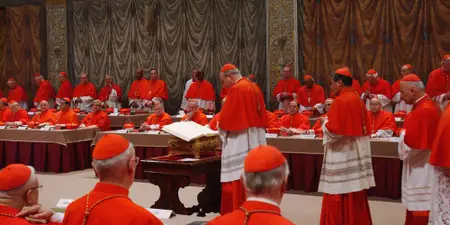
The Holy See is the Catholic Church's central government — the pope and the offices that assist him — and it is legally distinct from Vatican City: the Holy See existed for centuries before 1929 and is what conducts the Vatican's diplomacy, not the small territorial state itself.
This is the distinction that trips up almost everyone, including many visitors.
A government without a country — until 1929
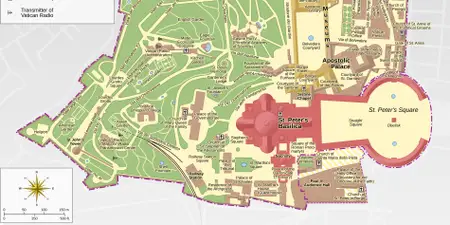
The Holy See governed the Church for centuries before Vatican City existed as a state; the 1929 Lateran Treaty gave it a small guaranteed territory, not the other way around.
What the Holy See actually does
It runs the Church's central administration and represents it diplomatically — exchanging ambassadors, signing treaties, holding a seat at international bodies.
Why the distinction matters for visitors
In practice, it changes little about a visit — but it explains oddities like the Vatican having diplomatic relations with countries despite being smaller than most airports.
Does the Holy See own Vatican City, or the other way around?
The Holy See is the sovereign, governing authority; Vatican City State is its territorial base, created in 1929 specifically to guarantee the Holy See's independence.
Can the Holy See exist without Vatican City?
In principle yes — it existed as an entity for centuries before Vatican City was created in 1929, since it's the Church's governing authority, not the territory itself.
Does the Holy See have relations with other countries the way a normal state does?
Yes — it maintains diplomatic relations with most of the world's countries, a role rooted in the Holy See's authority rather than Vatican City's small territory.