The most misleading name in the Vatican belongs to an archive that's been open to researchers for well over a century.
“Secret” doesn't mean what it sounds like
The name traces to the Latin archivum secretum, closer in original meaning to “private” or “personal” — the pope's own archive, as opposed to material held publicly — rather than anything classified. It's one of several Vatican 'mysteries' that turn out to be well documented; in 2019, Pope Francis renamed it the Vatican Apostolic Archive specifically to end the confusion.
What's actually inside
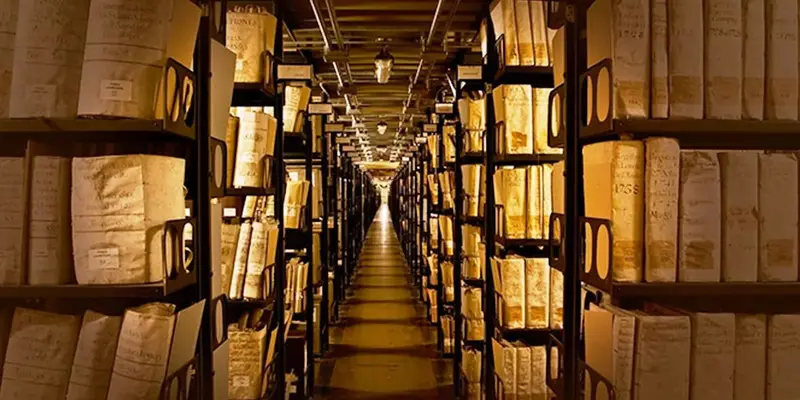
The collection spans more than a thousand years and roughly 85 linear kilometres of shelving, including correspondence, papal bulls, and administrative records — among the more famous items scholars have found: documents from the trial of Galileo, and Henry VIII's petition for an annulment, bearing the wax seals of the English peers who backed it.
Getting in isn't easy, but it's not secret
Qualified researchers — generally postgraduate scholars with a specific project — can apply for a reading-room pass, a system that's been in place since Pope Leo XIII opened the archive to historians in 1881; there's no public walk-in access, but it's an application process, not a wall.