
Officially, the euro in your pocket and a euro from the Vatican are worth exactly the same. In practice, one of them can be worth hundreds of times more.
A tiny country, a tiny mintage
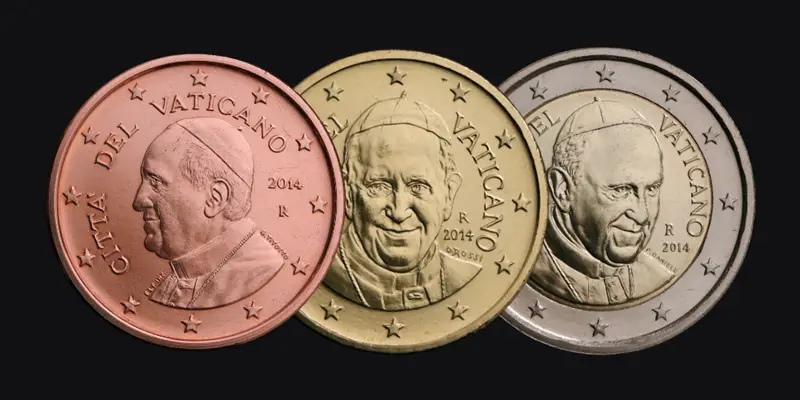
Vatican City has issued its own euro coin designs since 2002 under a monetary agreement with the EU, despite not being a member state — but because its population and economy are minuscule, its annual print runs are a tiny fraction of any EU country's, making most Vatican coins scarce from the day they're released.
The coins nobody plans for
The most sought-after Vatican coins are “sede vacante” issues — struck only during the brief interregnum between a pope's death or resignation and the election of a successor, bearing the coat of arms of the Apostolic Camera instead of a papal portrait. Because that window usually lasts only a few weeks, sede vacante mintages are smaller still, and collectors watch papal transitions as closely as any Vatican-watcher does.
Face value versus collector value
A Vatican coin spends exactly like any other euro coin across the eurozone — but in practice almost none circulate; collectors buy official sets directly, and secondary-market prices for popular years can run to many times face value.