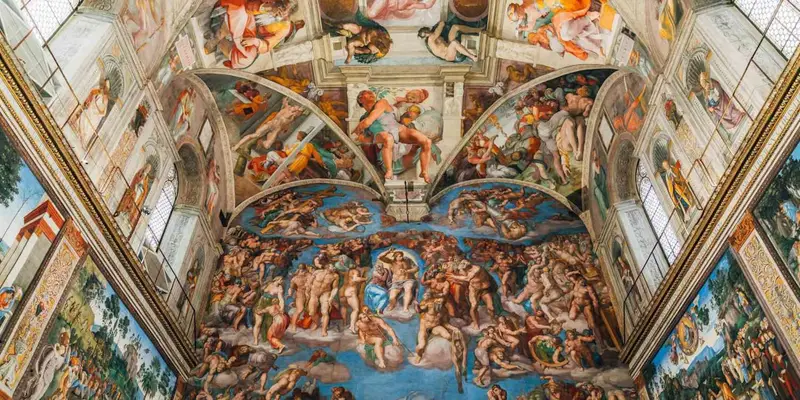
Built in 1473–1481 as Pope Sixtus IV's fortified private chapel, the Sistine Chapel had wall frescoes by Perugino, Botticelli and Ghirlandaio for nearly 30 years before Michelangelo ever touched its ceiling — and it still doubles as the room where popes are elected.
Original purposeThe pope's private, fortified chapel
Wall frescoes predate the ceiling byAbout 30 years
Still used forPapal conclaves
Visitors look up so quickly that the room itself often goes unnoticed.
A fortress with an altar
Sixtus IV built it with unusually thick, defensible walls — its proportions are traditionally said to echo the dimensions given for the Temple of Solomon in the Old Testament.
Frescoed twice, decades apart
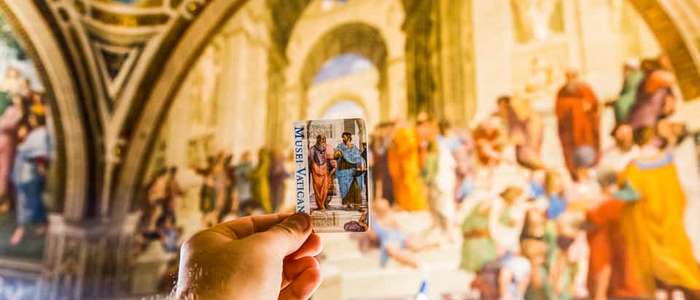
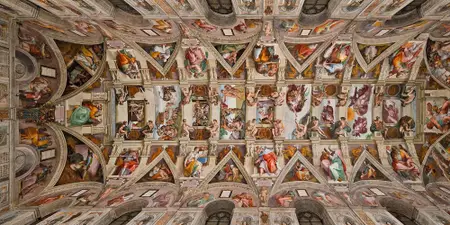
Perugino, Botticelli, Ghirlandaio and others frescoed the side walls in the early 1480s — nearly three decades before Michelangelo began the ceiling in 1508. Many visitors never look down long enough to notice them.
Still a working room, not just a museum
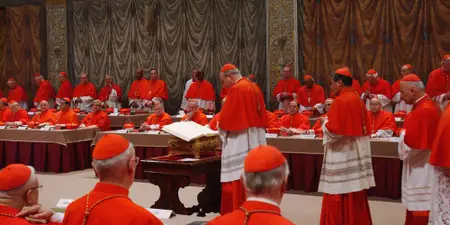
Every papal conclave since the late 15th century has been held here, sealed off from the outside world for the duration.
What did the Sistine Chapel's ceiling look like before Michelangelo painted it?
A plain blue sky dotted with gold stars — a simple decorative scheme that stood for over 20 years before Michelangelo replaced it with his famous scenes.
Why was the Sistine Chapel built as a fortress as well as a chapel?
Its thick walls and defensive proportions reflect the turbulent 15th-century politics Pope Sixtus IV built it under — it needed to double as a secure space, not just a place of worship.
Does the Sistine Chapel still serve its original ceremonial function today?
Yes — it remains the room where the College of Cardinals meets to elect a new pope, a function unchanged since the chapel was built.