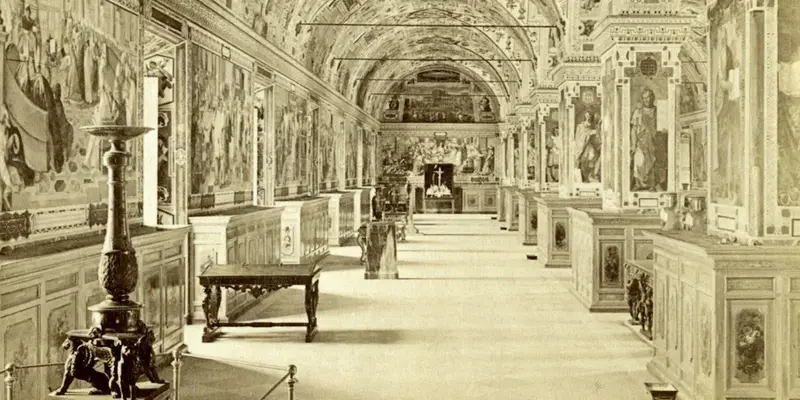
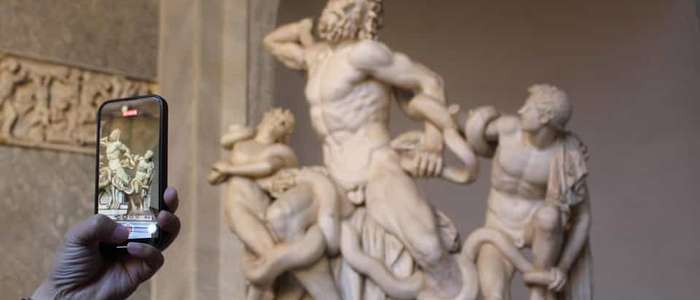
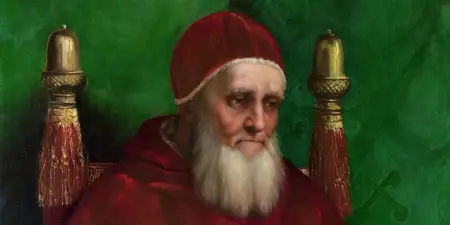
The Vatican Museums began in 1506, when Pope Julius II put a single newly discovered sculpture — the Laocoön — on public display in the Belvedere Courtyard. Over the following five centuries, successive popes expanded the collection into the sprawling complex of over 50 galleries visitors see today.
Formalised as a public museum18th century (Museo Pio-Clementino)
TodayOver 50 galleries and museums
What began as one sculpture in a courtyard grew, gallery by gallery and pope by pope, into the complex
visitors navigate today.
18th century: becoming a museum
Popes Clement XIV and Pius VI formalised the growing sculpture collection into the Museo
Pio-Clementino in the late 1700s, the first real step toward a public museum rather than a private papal
display.
19th century: new collections
The Etruscan Museum (1837) and Egyptian Museum (1839) were added under Pope Gregory XVI, broadening the
collection well beyond classical and Renaissance art.
20th–21st century
Further reorganisation, the addition of modern religious art, and steadily rising visitor numbers have
made the Vatican Museums one of the most visited museum complexes in the world.
Was the Vatican Museums always open to the public?
Not from the start — the collection began as a private papal display in 1506, with broader public access developing gradually, especially from the 18th century onward.
Which pope is considered the true founder of the Vatican Museums?
Julius II, for putting the Laocoön on public display in 1506 — though the Museums as a coherent institution took further shape under later popes who kept expanding the collection.
Has the Vatican Museums' collection ever shrunk, or only grown over time?
It has only grown — despite occasional wartime disruptions, no pope has significantly reduced the collection since its founding.