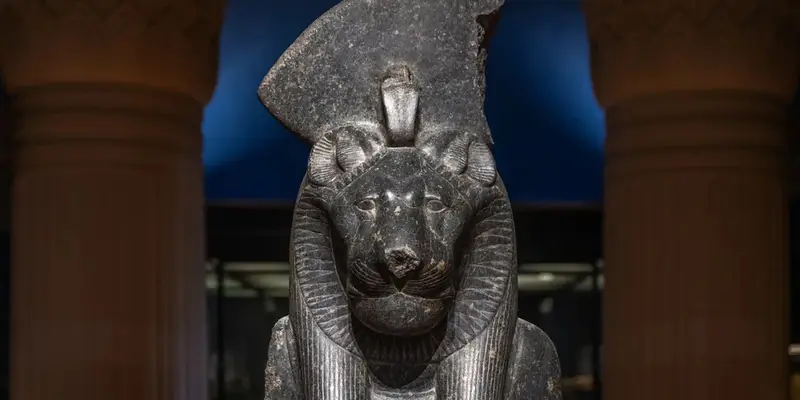
The Egyptian Museum, founded in 1839 under Pope Gregory XVI, holds one of the largest collections of ancient Egyptian and Near Eastern antiquities outside Egypt, including mummies, sarcophagi and statues — often one of the more engaging sections for children.
FocusAncient Egyptian and Near Eastern antiquities
The collection grew out of 19th-century papal acquisitions and excavations, and sits near the start of
the visitor route — easy to see without a big detour, and a genuine highlight for younger visitors who
might otherwise flag during gallery after gallery of Renaissance painting.
The collection spans nine rooms, arranged roughly by theme rather than strict chronology — sarcophagi and funerary items cluster near the entrance, with a smaller display of Mesopotamian and Assyrian material further in that most visitors move past without stopping.
Is the Egyptian Museum worth visiting if I'm short on time?
Only if Egyptian history specifically interests you — it's one of the first sections on the standard route, so skipping it is straightforward if you'd rather save time for the Sistine Chapel.
How did the Vatican come to have an Egyptian collection at all?
Pope Gregory XVI founded it in 1839 to house a growing number of Egyptian and Near Eastern antiquities already in Vatican hands, some originally brought to Rome in antiquity.
Are there actual mummies on display, not just statues and artifacts?
Yes — several mummies and sarcophagi are on display, part of why the section tends to hold children's attention more than some of the painting galleries.