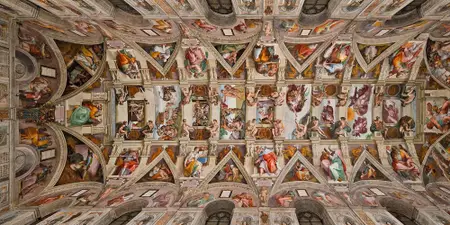
The Sistine Chapel was built between 1473 and 1481 for Pope Sixtus IV, whom it's named after, and has served as the site of the papal conclave — where cardinals elect a new Pope — since 1878. Its most famous decoration, Michelangelo's ceiling, was added decades later, between 1508 and 1512.
Decades before Michelangelo touched the ceiling, the chapel's side walls were frescoed in the 1480s by a
roster of Renaissance masters — Botticelli, Perugino, Ghirlandaio and others — with scenes from the lives
of Moses and Christ that are still there today, if often overlooked by visitors looking up.
Two commissions, decades apart
Pope Julius II commissioned the ceiling in 1508; Michelangelo, who considered himself primarily a
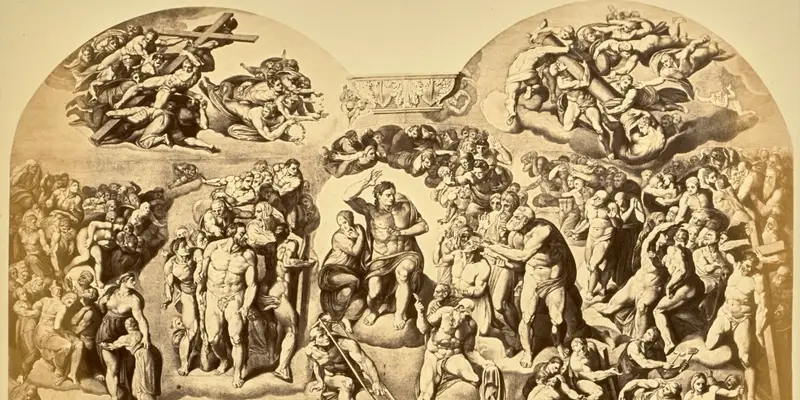
sculptor, worked on it until 1512. More than twenty years later, under Pope Paul III, he returned to paint
The Last Judgment on the altar wall (1536–1541).
A working chapel
Since 1878 the Sistine Chapel has been the site of the conclave, where the College of Cardinals meets to
elect each new Pope — part of why its rules on silence and photography are enforced more strictly than
almost anywhere else in the Vatican Museums.
Was Michelangelo the only artist to work on the Sistine Chapel?
No — the side walls were frescoed in the 1480s by other Renaissance masters including Botticelli, Perugino and Ghirlandaio, decades before Michelangelo painted the ceiling.
Why is it called the Sistine Chapel?
It's named after Pope Sixtus IV, who commissioned its construction.
Has the Sistine Chapel been restored since Michelangelo's time?
Yes — a major, closely studied restoration in the 1980s and 1990s cleaned centuries of soot and grime, revealing the brighter original colours visitors see today.
Last verified: August 2026.
Source: Vatican Museums official website (museivaticani.va).