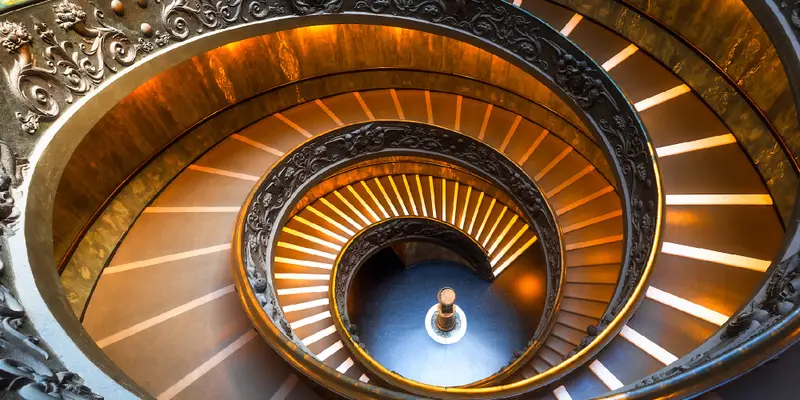
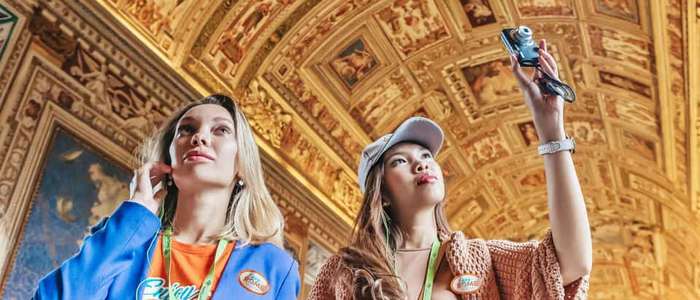
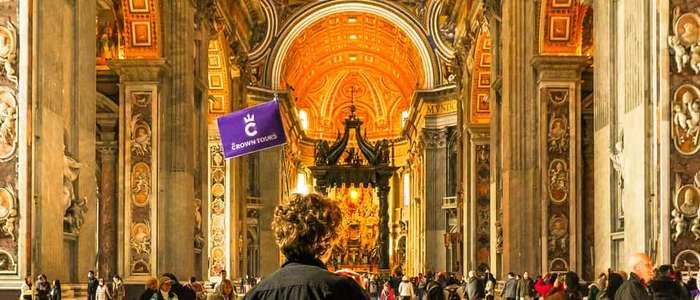
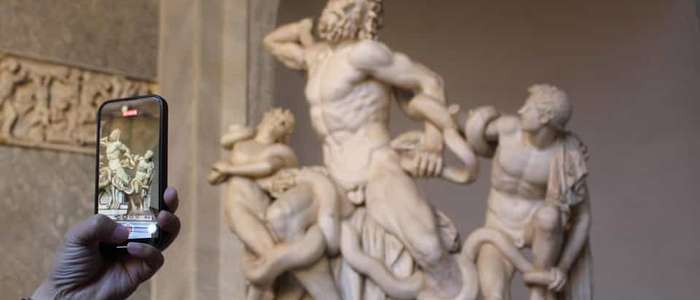
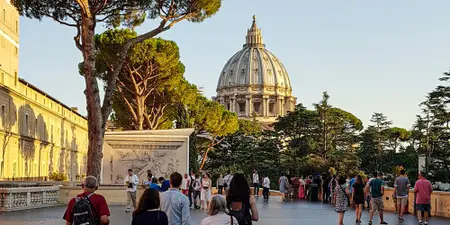
The Vatican Museums complex has grown organically over five centuries, incorporating Renaissance additions like the Belvedere Courtyard alongside the modern spiral staircase most visitors now take to exit — itself one of the most photographed spots in the whole complex, despite dating only to 1932.
Originally designed by the architect Bramante to link the Belvedere Palace to the Apostolic Palace, the
courtyard was later subdivided as the collection grew, and today forms part of the route through the
Pio-Clementino Museum.
Two spiral staircases, often confused
Visitors frequently photograph the famous double-helix staircase near the exit, assuming it's a
centuries-old Renaissance feature — it was actually designed by architect Giuseppe Momo in 1932. An older,
separate spiral ramp attributed to Bramante, originally built so horses and carriages could ascend,
exists elsewhere in the complex.
Is the famous spiral staircase at the exit very old?
No — the well-known double-helix staircase most visitors photograph on the way out was designed by Giuseppe Momo in 1932.
How old is the Belvedere Courtyard?
It dates to the late 15th century, originally built to connect the Vatican Palace to a papal villa before later architects filled it in with galleries over the following centuries.
Is the Vatican Museums building one continuous structure or several joined together?
Several — it's a complex of connected palaces and galleries added over roughly 500 years, not a single building designed all at once.