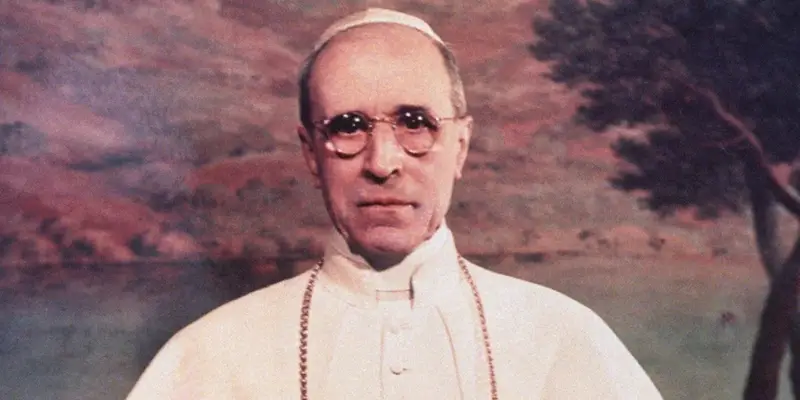
Pope Pius XII (Eugenio Pacelli, r. 1939–1958) led the Vatican through World War II — a papacy still debated by historians, who are divided over whether his largely quiet public stance on the Holocaust reflected caution, diplomacy, or a serious moral failure.
Wartime roleMaintained Vatican neutrality through World War II
Archives opened2020, by Pope Francis, for historians to reassess his record
He became pope six months before the Second World War began, and his choices during it are still argued over today.
A career diplomat becomes pope
Eugenio Pacelli had served as the Vatican's ambassador to Germany and later Secretary of State before his election in March 1939 — experience that shaped a papacy defined almost immediately by the war closing in around it.
Neutrality, and its limits
Pius XII kept the Vatican officially neutral throughout the war, using diplomatic channels and, historians increasingly document, quiet local efforts — including sheltering Jewish refugees in Church properties in Rome — while avoiding the kind of explicit public condemnation of Nazi atrocities that critics argue his moral authority demanded.
A debate that's still being resettled
In 2020, the Vatican opened Pius XII's full wartime archives to researchers for the first time, a move Pope Francis backed specifically to let historians reassess the record with primary sources rather than secondhand accounts.
Historians are divided over whether his largely private, diplomatic approach to Nazi Germany — rather than public condemnation — reflected caution that saved lives or a serious moral failure.
Did the Vatican shelter Jewish people during the war?
Yes — a growing body of historical research documents Jewish refugees sheltered in convents, religious houses and other Church properties in Rome during the German occupation.
Can historians access Pius XII's full wartime records now?
Yes — the Vatican opened his complete pontifical archives to researchers in 2020, decades after his death.